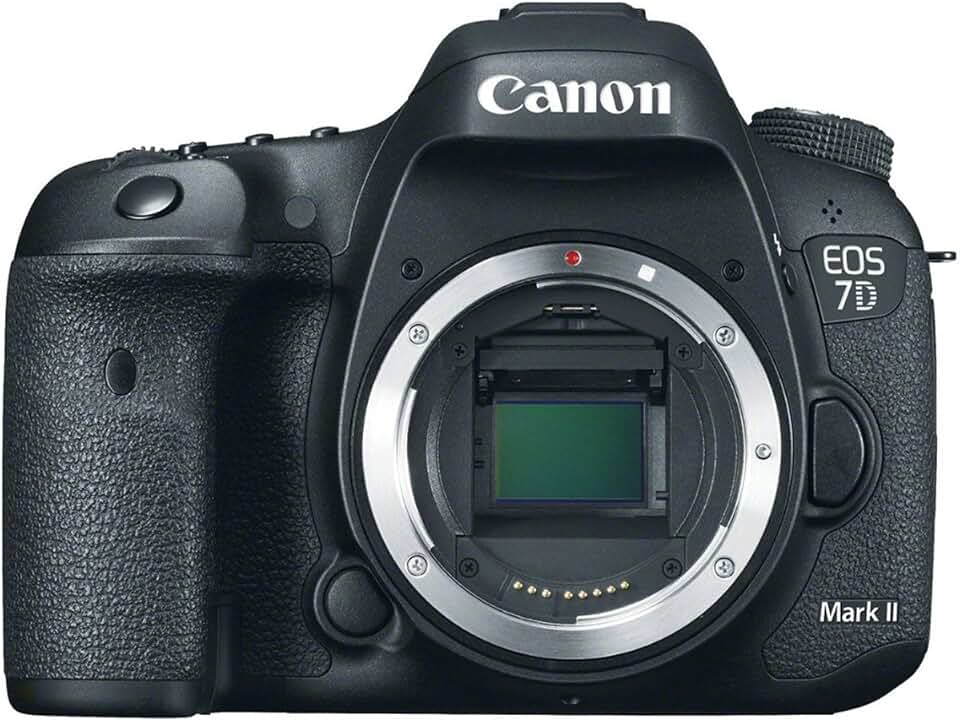
Canon 7D Mark II: Ultimate DSLR – Worth It
The Canon 7D Mark II, even as a renewed model, stands out as an ultimate DSLR camera designed for speed and performance, particularly appealing to sports and wildlife photographers. This review delves into why this camera, with its robust build and advanced features, continues to be a highly regarded choice for enthusiasts and professionals alike.
Quick Summary: Canon EOS 7D Mark II
- Rating: 4.5 out of 5 stars
- Price: $655.00 (Renewed Body Only)
- Key Pros:
- Exceptional Autofocus System for action.
- High-speed continuous shooting (10 fps).
- Durable, weather-sealed build quality.
- Key Cons:
- Lower low-light performance compared to full-frame.
- Heavier body, less portable for some users.
Table of Contents
Canon 7D Mark II Overview
The Canon 7D Mark II, initially launched as Canon’s flagship APS-C DSLR, quickly carved a niche for itself among photographers demanding speed and precision. It was engineered with a focus on action, sports, and wildlife photography, where capturing fleeting moments is paramount.
This camera boasts a 20.2-megapixel APS-C CMOS sensor, which, while not a full-frame sensor, provides excellent detail and a 1.6x crop factor. This crop factor is particularly advantageous for telephoto shooting, effectively extending the reach of lenses, which is invaluable for capturing distant subjects like birds or athletes.
One of the most compelling aspects of the 7D Mark II is its advanced autofocus system. Featuring 65 all cross-type AF points, it offers exceptional tracking capabilities, allowing photographers to maintain sharp focus on fast-moving subjects even in challenging conditions. This system is comparable to those found in professional full-frame bodies of its era, making it a serious tool for demanding applications.
The camera’s continuous shooting speed of up to 10 frames per second (fps) further solidifies its reputation as an action camera. This high burst rate, combined with a robust buffer, ensures that photographers can capture sequences of rapid motion without missing critical shots. For sports photographers, this speed can make the difference between a good shot and a truly iconic one.
Beyond its speed, the Canon 7D Mark II is built to withstand the rigors of professional use. Its magnesium alloy body is weather-sealed, offering protection against dust and moisture. This durable construction means photographers can confidently take the camera into diverse environments, from dusty sports fields to damp forests, without undue concern for its performance.
The camera also offers impressive video capabilities, recording Full HD 1080p video at up to 60fps. Its Dual Pixel CMOS AF system provides smooth and accurate autofocus during video recording, a significant advantage for filmmakers. This makes the 7D Mark II a versatile hybrid shooter, capable of delivering high-quality stills and dynamic video footage.
For those considering a renewed model, the Canon 7D Mark II represents an incredible value proposition. It offers professional-level features and performance at a significantly reduced price compared to its original retail cost. Renewed cameras are typically inspected, cleaned, and often come with a warranty, providing peace of mind to buyers.
While newer cameras have emerged, the core strengths of the 7D Mark II – its speed, autofocus, and build quality – remain highly relevant. It continues to be a favorite among photographers who prioritize these aspects, especially those working within the genres it was designed to excel in. Its enduring appeal is a testament to Canon’s engineering prowess during its development.
The camera’s intuitive control layout and extensive customization options also contribute to its user-friendly experience. Photographers can quickly adjust settings, ensuring they can react swiftly to changing photographic situations. This thoughtful design enhances its utility in fast-paced shooting environments, allowing for a more fluid and responsive workflow.
Ultimately, the Canon 7D Mark II is more than just a camera; it’s a specialized tool built for a specific purpose. Its focus on speed, precision, and durability makes it a powerhouse for capturing dynamic subjects, offering a compelling package for enthusiasts and aspiring professionals.
Canon 7D Mark II Key Features & Specs
The Canon 7D Mark II is packed with features that underscore its performance-oriented design. Understanding these specifications is key to appreciating its capabilities, especially for its target audience of action photographers.
20.2 Megapixel APS-C CMOS Sensor
At its core, the 7D Mark II features a 20.2-megapixel APS-C CMOS sensor. While not the highest resolution on the market today, this sensor strikes an excellent balance between detail, file size, and low-light performance for an APS-C chip. It produces sharp images with good color reproduction.
The APS-C format provides a 1.6x crop factor, which means a 200mm lens behaves like a 320mm lens on a full-frame camera. This extended reach is a significant advantage for sports and wildlife photographers who often need to capture distant subjects without carrying excessively long and heavy lenses. It effectively brings the action closer to the photographer.
65-Point All Cross-Type AF System
One of the standout features is its sophisticated 65-point all cross-type autofocus system. Every single AF point is a cross-type sensor, meaning it detects focus in both horizontal and vertical planes, leading to superior accuracy and speed, even in challenging lighting conditions.
This advanced AF system is highly customizable, allowing photographers to select from various AF area modes, including Single-point AF, Zone AF, Large Zone AF, and 65-point Automatic Selection AF. This flexibility ensures optimal focus tracking for a wide array of moving subjects, from erratic birds in flight to fast-paced sporting events.
High-Speed Continuous Shooting (Up to 10 fps)
The ability to shoot at up to 10 frames per second is a game-changer for capturing decisive moments. This rapid-fire capability allows photographers to freeze action sequences, providing a greater chance of getting the perfect shot. It’s particularly useful in situations where events unfold quickly and unpredictably.
Paired with dual DIGIC 6 image processors, the 7D Mark II can sustain these high burst rates for an impressive number of frames. This robust buffer performance ensures that you won’t hit a wall after just a few shots, which is crucial when photographing extended action sequences.
Dual Pixel CMOS AF for Video and Live View
Canon’s innovative Dual Pixel CMOS AF technology is integrated into the 7D Mark II, providing incredibly smooth and accurate autofocus during Live View shooting and video recording. This system uses photodiodes on the sensor to perform phase-detection autofocus, mimicking the performance of a camcorder.
For videographers, this means professional-looking rack focus effects and reliable subject tracking without the need for manual focus pulling or external focus aids. It significantly enhances the usability of the camera for capturing high-quality Full HD 1080p video at various frame rates, up to 60p.
Durable, Weather-Sealed Magnesium Alloy Body
The 7D Mark II is built like a tank, featuring a rugged magnesium alloy chassis and extensive weather sealing. This construction provides excellent protection against dust, moisture, and electromagnetic interference, making it a reliable choice for outdoor and challenging environments.
Its robust build quality ensures longevity and durability, a critical factor for photographers who frequently shoot in adverse conditions. The camera feels solid in hand, instilling confidence in its ability to withstand the demands of professional use.
Other Notable Specifications
- ISO Range: ISO 100-16000 (expandable to 51200) for versatile low-light performance.
- Shutter Speed: Up to 1/8000 sec, ideal for freezing fast action.
- Dual Card Slots: One CompactFlash (CF) and one SD card slot for flexible storage and backup.
- Built-in GPS: For geotagging images, useful for travel and wildlife photography.
- Customizable Controls: Numerous customizable buttons and dials allow photographers to tailor the camera to their specific workflow.
- Viewfinder: 100% viewfinder coverage provides an accurate preview of the scene.
These features collectively make the Canon 7D Mark II a powerful and versatile camera, particularly for photographers who need speed, precision, and durability in their gear. Its specifications are geared towards capturing dynamic subjects with exceptional clarity and reliability.
Pros & Cons of the Canon 7D Mark II
Every camera has its strengths and weaknesses, and the Canon 7D Mark II is no exception. While it excels in many areas, understanding its limitations is crucial for making an informed purchase, especially when considering a renewed model.
Pros:
- Blazing Fast Autofocus: The 65 all cross-type AF points provide incredibly fast and accurate focusing, even in challenging conditions. This system is a major highlight, making it superb for tracking erratic and fast-moving subjects. It performs exceptionally well for sports and wildlife.
- High-Speed Continuous Shooting: With 10 frames per second, the 7D Mark II allows photographers to capture critical moments in rapid succession. This high burst rate maximizes the chances of getting the perfect shot, which is invaluable in action-packed scenarios. The buffer performance is also robust.
- Exceptional Build Quality and Weather Sealing: The magnesium alloy body is robust and offers significant protection against dust and moisture. This durable construction ensures the camera can withstand harsh environments, making it a reliable tool for outdoor and adventure photographers.
- 1.6x Crop Factor Advantage: For telephoto shooters, the APS-C sensor’s crop factor effectively extends the reach of lenses. This means a 300mm lens behaves like a 480mm lens, allowing photographers to get closer to distant subjects without investing in much longer, heavier, and more expensive glass.
- Advanced Video Features with Dual Pixel AF: The Full HD 1080p video recording at up to 60fps, combined with smooth and reliable Dual Pixel CMOS AF, makes the 7D Mark II a strong contender for videography. It provides professional-looking autofocus transitions and excellent footage quality.
- Customizability and Ergonomics: The camera offers extensive customization options for buttons and dials, allowing users to tailor the controls to their specific shooting style. Its ergonomic design provides a comfortable grip, even during long shooting sessions, which is important for professional use.
- Dual Card Slots: The inclusion of both CF and SD card slots offers flexibility and redundancy. Photographers can use one slot for overflow, or configure the camera to write to both cards simultaneously for instant backup, providing peace of mind during critical assignments.
Cons:
- Lower Low-Light Performance Compared to Full-Frame: As an APS-C sensor, the 7D Mark II generally struggles more with high ISO noise than contemporary full-frame cameras. While its ISO performance is respectable for its class, photographers frequently shooting in very dim conditions might find its high ISO images less clean than those from a full-frame sensor.
- Weight and Size: The camera’s robust build, while a pro for durability, also contributes to its weight and bulk. It is a substantial camera body, which might be less appealing for photographers prioritizing portability or those with smaller hands. Carrying it with large lenses for extended periods can be tiring.
- Dynamic Range Limitations: While good, the dynamic range of the 7D Mark II’s sensor is not as expansive as some newer APS-C models or full-frame sensors. This means less flexibility in recovering details from extreme highlights or shadows during post-processing, especially in high-contrast scenes.
- No Built-in Wi-Fi: Unlike many modern cameras, the 7D Mark II does not feature built-in Wi-Fi for easy image transfer or remote control via a smartphone. Users need to purchase an optional Wi-Fi adapter (W-E1) for this functionality, which adds to the overall cost and complexity.
- Fixed LCD Screen: The LCD screen on the back of the camera is fixed and does not articulate or swivel. This can be a limitation for shooting from awkward angles, ground-level shots, or for video recording where a vari-angle screen offers greater flexibility.
- Older Generation Sensor Technology: While still capable, the sensor technology is older than what’s found in Canon’s latest mirrorless cameras. This means it might not offer the absolute cutting-edge in terms of resolution, dynamic range, or advanced image processing features available in newer models.
Despite these cons, the strengths of the Canon 7D Mark II, particularly its speed and autofocus, often outweigh its drawbacks for its intended users. For action-oriented photography, its performance remains highly competitive, especially at its current renewed price point.
Who Should Buy the Canon 7D Mark II?
The Canon 7D Mark II is a specialized tool, and as such, it’s not the ideal camera for everyone. However, for a specific segment of photographers, it offers an outstanding combination of features and performance, especially as a renewed body.
Sports Photographers
This camera is arguably at its best in the hands of a sports photographer. Its 10 fps continuous shooting speed, combined with the incredibly fast and accurate 65-point all cross-type autofocus system, makes it a powerhouse for capturing fast-paced action. Whether it’s a sprinting athlete, a diving catch, or a quick swing, the 7D Mark II is designed to keep up.
The robust build and weather sealing also mean it can withstand the often unpredictable environments of sporting events, from dusty fields to sudden downpours. The 1.6x crop factor is a bonus, providing extra reach for telephoto lenses, which is crucial for getting tight shots from the sidelines.
Wildlife Photographers
Similar to sports, wildlife photography often demands speed and reach. The 7D Mark II’s high burst rate is excellent for capturing animals in motion, such as birds in flight or a deer dashing through the forest. The sophisticated autofocus system is adept at tracking unpredictable subjects, ensuring sharp focus even as they move erratically.
The crop factor is a significant advantage here as well. It allows wildlife photographers to effectively extend the focal length of their lenses, bringing distant wildlife closer into the frame without needing to invest in extremely long and expensive super-telephoto lenses. This can be a huge cost-saver.
Action and Event Photographers
Beyond traditional sports and wildlife, any photographer who regularly shoots fast-moving subjects or events will find the 7D Mark II highly capable. This includes concert photographers, photojournalists covering dynamic scenes, or even those capturing energetic pets or children.
The camera’s quick responsiveness and reliable autofocus ensure that crucial moments are not missed. Its durable construction also makes it a dependable choice for professionals who need gear that can withstand the rigors of frequent use in varying conditions.
For more details on Canon’s camera lineup, you can visit the official Canon 7D Mark II product page.
Enthusiasts Seeking Pro-Level Performance on a Budget
For serious amateur photographers who aspire to professional-level performance but are constrained by budget, a renewed Canon 7D Mark II offers an incredible value. It delivers many of the core features found in higher-end Canon DSLRs at a fraction of the cost of a new full-frame camera.
This allows enthusiasts to invest in quality lenses, which often have a greater impact on image quality than the camera body itself. The 7D Mark II serves as an excellent platform for developing advanced photography skills, especially in action-oriented genres.
If you’re upgrading from an entry-level DSLR and want a significant leap in autofocus, speed, and build quality without breaking the bank, the 7D Mark II is a compelling option. It provides a robust, reliable, and high-performing body that can handle demanding photographic tasks with ease.
Videographers on a Budget
While primarily a stills camera, its advanced video features, particularly the Dual Pixel CMOS AF, make it a viable option for videographers. Those looking to shoot high-quality Full HD video with smooth autofocus for interviews, events, or short films can benefit from its capabilities.
The ability to shoot at 60p allows for smooth slow-motion footage, adding a cinematic touch to productions. For independent filmmakers or content creators who need a reliable and affordable camera that can deliver good video, the 7D Mark II is certainly worth considering.
In summary, the Canon 7D Mark II is for photographers who prioritize speed, autofocus performance, durability, and telephoto reach. It’s an excellent choice for action-oriented genres and for budget-conscious enthusiasts looking to step up their game.
FAQ about Canon 7D Mark II
Here are some frequently asked questions about the Canon 7D Mark II, especially concerning its renewed status and practical usage.
Q1: What does “renewed” mean for the Canon 7D Mark II?
A1: A renewed Canon 7D Mark II means the camera has been professionally inspected, tested, and cleaned by qualified suppliers. It has been restored to its original working condition, often looking and functioning like new. This process typically addresses any cosmetic imperfections and ensures all components are fully functional.
Renewed products usually come with a limited warranty, providing peace of mind similar to buying new. This makes them a more affordable and environmentally friendly option compared to buying a brand-new unit, allowing access to premium gear at a lower price point.
Q2: Is the Canon 7D Mark II good for low-light photography?
A2: The Canon 7D Mark II offers a native ISO range of 100-16000, expandable to 51200. While it performs well for an APS-C sensor, its low-light performance is generally not as strong as full-frame cameras. You might notice more noise at higher ISOs (e.g., above ISO 3200-6400) compared to a full-frame equivalent.
However, with proper exposure techniques and good post-processing, usable images can still be achieved in moderately low light. For truly challenging dark environments, a full-frame sensor or lenses with very wide apertures might be preferred.
Q3: What type of memory cards does the 7D Mark II use?
A3: The Canon 7D Mark II features dual memory card slots: one for CompactFlash (CF) cards and one for SD/SDHC/SDXC cards. This dual-slot configuration offers versatility, allowing you to use existing cards or set up backup recording for critical shoots.
For high-speed continuous shooting and 1080p video, it’s recommended to use fast CF cards (UDMA 7 compatible) and high-speed SD cards (UHS-I compatible) to ensure optimal performance and prevent buffer slowdowns. Using slower cards can limit the camera’s ability to reach its maximum burst rates.
Q4: Can I use older Canon EF lenses with the 7D Mark II?
A4: Yes, the Canon 7D Mark II is fully compatible with all Canon EF lenses. It is also compatible with Canon EF-S lenses, which are designed specifically for APS-C sensor cameras. The EF mount is the standard for Canon DSLRs, providing a vast ecosystem of lenses.
When using EF lenses, remember the 1.6x crop factor, which will effectively increase their focal length. This compatibility means you have a wide range of options, from prime lenses to telephoto zooms, allowing for great flexibility in your photographic pursuits.
Q5: Is the 7D Mark II still relevant in the age of mirrorless cameras?
A5: Absolutely. While mirrorless cameras offer advantages like electronic viewfinders and often better video features, the 7D Mark II remains highly relevant for specific use cases. Its optical viewfinder, robust build, and exceptional autofocus for action are still preferred by many photographers.
For photographers already invested in Canon’s EF lens system, or those who prefer the tactile feel and battery life of a DSLR, the 7D Mark II offers a proven and powerful platform. Its renewed price point also makes it an extremely attractive option for performance per dollar.
Q6: What is the battery life like on the Canon 7D Mark II?
A6: The Canon 7D Mark II uses the LP-E6N battery pack, which offers excellent battery life for a DSLR. Under CIPA testing standards, it’s rated for approximately 670 shots per charge using the viewfinder. In real-world usage, many photographers report getting significantly more shots, often exceeding 800-1000, depending on shooting habits.
Using Live View or shooting a lot of video will naturally consume battery faster. For extended shoots, carrying a spare battery is always a good practice. The robust battery performance is one of the advantages DSLRs often hold over early mirrorless systems.
Q7: Does the 7D Mark II have built-in image stabilization?
A7: No, the Canon 7D Mark II does not have in-body image stabilization (IBIS). Canon relies on lens-based image stabilization (IS) for its DSLR systems. Therefore, to benefit from image stabilization, you will need to use lenses that feature Canon’s optical image stabilization technology.
Many Canon EF and EF-S lenses come with IS, especially telephoto and zoom lenses, which are commonly paired with the 7D Mark II for sports and wildlife. When purchasing lenses, look for the ‘IS’ designation in their name if stabilization is important to your shooting style.
Final Verdict on the Canon 7D Mark II
The Canon 7D Mark II, even as a renewed body, remains an incredibly compelling option for photographers who prioritize speed, precision, and durability. It was engineered with a clear purpose: to excel in capturing fast-moving subjects, and in that regard, it delivers outstanding performance.
Its 65-point all cross-type autofocus system is a marvel, providing consistent and accurate tracking that few cameras in its price range can match. This, combined with a blistering 10 frames per second continuous shooting, makes it an indispensable tool for sports, wildlife, and any action-oriented photography.
The robust, weather-sealed magnesium alloy body is another significant advantage. It gives photographers the confidence to shoot in challenging conditions without worrying about their gear. This level of build quality is usually found in much more expensive professional cameras, making the 7D Mark II an excellent value.
While its APS-C sensor might not offer the same low-light performance or dynamic range as modern full-frame sensors, it still produces excellent image quality in good light. The 1.6x crop factor is a distinct advantage for telephoto applications, effectively extending the reach of your lenses, which is a huge benefit for wildlife and sports photographers.
For those considering a renewed model, the value proposition is even stronger. You get a professional-grade camera with features that still hold up remarkably well, at a significantly reduced cost. This allows for greater investment in quality lenses, which are crucial for maximizing image potential.
The 7D Mark II is not just a camera; it’s a workhorse designed for photographers who need their gear to perform reliably under pressure. Its intuitive controls and comfortable ergonomics further enhance the shooting experience, allowing you to focus on capturing the moment rather than fumbling with settings.
In conclusion, if you are a sports, wildlife, or action photographer seeking a high-performance DSLR with an exceptional autofocus system, rapid burst shooting, and a durable build, the Canon 7D Mark II is an outstanding choice. It’s a camera that continues to prove its worth, offering incredible capabilities that belie its age and renewed price point.
For further research on Canon products, you can explore their global website: Canon Global.