Non-Sparking Tool Set: Ultimate Impressive Safety
Product Summary: 16-Piece Non-Sparking Tool Set
Rating: Not yet rated (0 reviews)
Price: $1209.99
Key Pros:
- FM Approved: Certified for use in hazardous, explosive environments, ensuring compliance and safety.
- Premium Beryllium Copper Construction: Offers superior non-sparking properties, corrosion resistance, and good strength.
- Comprehensive 16-Piece Kit: Includes essential tools like wrenches, hammer, pliers, and shears for diverse tasks.
- Exceptional Safety: Drastically reduces the risk of ignition in volatile atmospheres, protecting personnel and assets.
- Durable and Long-lasting: Designed to withstand harsh industrial conditions and frequent use.
Key Cons:
- High Price Point: A significant investment due to specialized materials and manufacturing processes.
- Specific Niche Use: Primarily designed for hazardous environments, making it overkill for general-purpose tasks.
Table of Contents
When working in hazardous environments, safety is not just a priority; it’s a non-negotiable requirement. The Non-Sparking Tool Set is engineered precisely for these critical conditions, offering an ultimate solution for professionals operating in potentially explosive atmospheres. This 16-piece beryllium copper kit stands out as an impressive safety investment, designed to prevent the ignition of flammable gases, dusts, or liquids that could lead to catastrophic accidents. It’s not just a collection of tools; it’s a comprehensive safety system crafted to meet the most stringent industrial standards.
Non-Sparking Tool Set Overview
In industries ranging from oil and gas to chemical manufacturing and pharmaceutical production, the presence of flammable vapors, combustible dusts, or explosive gases is a constant threat. Traditional tools, typically made from hardened steel, can generate sparks when struck, dropped, or rubbed against other metallic surfaces. These seemingly innocuous sparks possess enough energy to ignite an explosive atmosphere, leading to severe injuries, fatalities, and extensive property damage.
This Non-Sparking Tool Set directly addresses this critical safety gap. Unlike conventional tools, these are constructed from specialized alloys, primarily beryllium copper in this case, which significantly reduces the risk of generating friction or impact sparks. The very essence of these tools lies in their material composition, which is chosen for its low-sparking characteristics, non-magnetic properties, and resistance to corrosion.
The 16-piece collection is not merely an assortment but a carefully curated selection of essential hand tools designed to tackle a wide range of maintenance, repair, and operational tasks within hazardous zones. Each tool within this set, from the bung wrench to the tin shears, has been specifically chosen for its utility and safety compliance in these demanding environments. The inclusion of the FM Approved certification further elevates its standing, providing an independent verification that these tools meet rigorous national and international standards for preventing ignition.
Understanding the fundamental principles behind a non-sparking tool set is paramount. It’s about mitigating risk by eliminating one of the three components of the fire triangle: the ignition source. While the other two – fuel and oxygen – are often inherent to the environment, controlling ignition sources like sparks is achievable through specialized equipment. This set provides professionals with the confidence and compliance necessary to perform their duties safely, ensuring that their tools do not become a liability in volatile conditions. It’s an investment in safety culture and operational integrity, reflecting a proactive approach to hazard control.
These tools are indispensable in areas classified as hazardous locations, such as Class I, Division 1 and 2 (flammable gases or vapors), Class II, Division 1 and 2 (combustible dusts), and Class III, Division 1 and 2 (ignitable fibers). Industries like petroleum refining, chemical processing, paint manufacturing, mining, and grain handling rely heavily on such specialized equipment. The very presence of a OSHA-compliant safety tool indicates a commitment to protecting personnel and assets from potential explosive hazards.
Non-Sparking Tool Set Key Features & Specs
The true value of this Non-Sparking Tool Set lies in its meticulously chosen features and specifications, all geared towards maximum safety and performance in hazardous environments. Each element plays a crucial role in delivering a reliable and compliant solution for professionals.
Premium Beryllium Copper Construction
The cornerstone of this set’s non-sparking capability is its construction from beryllium copper (BeCu). This alloy is renowned for its exceptional properties that make it ideal for safety tools:
- Non-Sparking: When struck against hard surfaces, beryllium copper produces minimal to no sparks, significantly reducing the risk of igniting flammable materials. This is its primary safety advantage over steel tools.
- Non-Magnetic: BeCu is completely non-magnetic, making these tools suitable for use in environments sensitive to magnetic interference, such as MRI rooms, military applications, or areas near sensitive electronic equipment.
- Corrosion Resistance: It exhibits excellent resistance to corrosion, particularly in saltwater, acidic, and alkaline environments. This makes the tools durable and long-lasting in harsh chemical processing plants or marine settings.
- Good Strength and Hardness: While not as hard as hardened steel, beryllium copper offers a good balance of strength, hardness, and wear resistance, allowing the tools to perform effectively without compromising safety. Its tensile strength and yield strength are impressive for a non-ferrous alloy.
- Thermal Conductivity: Beryllium copper also has good thermal conductivity, which helps dissipate heat quickly, further reducing the potential for hot spots that could act as an ignition source.
Compared to other non-sparking materials like aluminum bronze, beryllium copper generally offers superior mechanical properties, including higher tensile strength and hardness, which translates to better durability and tool life. However, it also typically comes at a higher cost due to the material’s properties and processing requirements. It’s important to note that while beryllium copper is safe in its solid form, precautions must be taken if grinding or machining these tools, as beryllium dust can be hazardous if inhaled. Proper training and ventilation are crucial in such rare scenarios.
FM Approved Certification
One of the most critical aspects of this Non-Sparking Tool Set is its FM Approved status. FM Approvals is an independent testing and certification agency that sets rigorous standards for industrial products and services. When a product is FM Approved, it means it has undergone extensive testing and meets strict criteria for safety, quality, and performance. For non-sparking tools, this certification is paramount because it provides:
- Independent Verification: Assures users that the tools have been objectively tested and validated for their non-sparking properties in simulated hazardous conditions.
- Compliance Assurance: Helps companies meet regulatory requirements and industry best practices for safety in hazardous locations. This is often a mandatory requirement for insurance purposes and operational permits in high-risk industries.
- Reliability and Trust: FM Approval signifies a high level of confidence in the product’s ability to perform as advertised, reducing the risk of equipment failure or safety incidents.
The FM Approval process involves stringent material analysis, spark testing under various impact conditions, and durability assessments to ensure the tools maintain their integrity and safety characteristics over time. This stamp of approval differentiates this set from generic non-sparking tools that may not have undergone such rigorous validation. You can learn more about FM Approvals standards directly from their website.
Comprehensive 16-Piece Kit
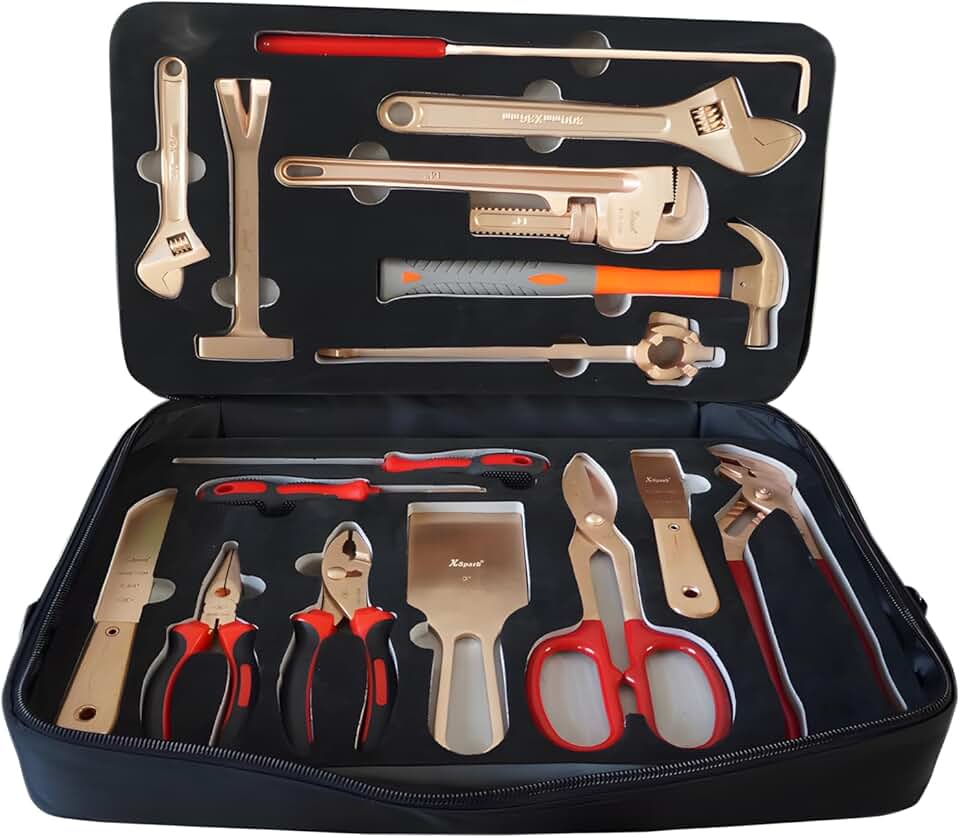
This set is designed to be a versatile and self-sufficient kit for common maintenance and repair tasks in hazardous environments. The 16 pieces include a strategic selection of tools:
- Bung Wrench: Essential for safely opening and closing drums and barrels containing flammable liquids or chemicals without generating sparks.
- Pipe Wrench: Used for gripping and turning pipes and fittings, critical in chemical processing or oil and gas facilities.
- Adjustable Wrench: Provides versatility for various nut and bolt sizes, reducing the need for multiple fixed wrenches.
- Hammer: For striking tasks where impact without sparks is crucial, such as tapping components into place or dislodging stuck parts.
- Putty Knife: Useful for scraping, cleaning, or applying compounds in areas where metal-on-metal scraping could be dangerous.
- Pliers (various types): For gripping, bending, and cutting wires or small components safely.
- Tin Shears: For cutting sheet metal or other materials without creating sparks from friction.
- Other complementary tools: The full set likely includes a range of other common hand tools such as screwdrivers, chisels, or punches, all conforming to the same non-sparking material standards.
The advantage of a comprehensive kit like this is that it equips a technician with the necessary tools for most tasks without having to mix and match or risk using an unsafe tool. This consistency in material and safety rating across the entire set is a significant benefit, streamlining safety protocols and inventory management.
Pros & Cons
Evaluating any specialized tool requires a balanced look at its advantages and disadvantages. For the Non-Sparking Tool Set, the benefits heavily outweigh the drawbacks for its intended purpose, but understanding both sides is crucial for an informed decision.
Pros
- Unmatched Safety in Hazardous Environments: This is the primary and most significant advantage. The beryllium copper construction drastically reduces the risk of generating sparks from impact or friction. This directly prevents the ignition of flammable gases, vapors, dusts, and fibers, which is critical in industries such as oil & gas, chemical processing, aerospace, and munitions manufacturing. It transforms a high-risk activity into a manageable one.
- FM Approved Certification for Compliance: The FM Approved stamp is not just a label; it’s a guarantee of rigorous testing and adherence to global safety standards. This certification is often a mandatory requirement for insurance, regulatory compliance (e.g., OSHA, ATEX directives), and internal safety protocols in many hazardous industries. It provides peace of mind that the tools are fit for purpose and will withstand scrutiny from safety auditors.
- Premium Beryllium Copper Construction: Beyond just being non-sparking, beryllium copper offers a suite of other beneficial properties. It is non-magnetic, making it safe for use around sensitive electronic equipment or in MRI environments. It also boasts excellent corrosion resistance, which is vital in chemical plants, marine settings, or anywhere tools are exposed to harsh, corrosive substances. This material ensures longevity and reliability even under challenging conditions.
- Comprehensive 16-Piece Kit: The thoughtful selection of 16 essential hand tools means that technicians have a versatile array of instruments at their disposal. This reduces the need to source individual tools and ensures that all critical tasks, from tightening pipes to opening drums, can be performed safely with certified equipment. The kit covers a broad spectrum of common maintenance and repair operations.
- Durability and Longevity: While not as hard as tool steel, beryllium copper is a robust alloy that offers good wear resistance and strength for its application. These tools are built to last in demanding industrial environments, resisting the wear and tear that can degrade lesser quality tools. Proper care and maintenance will ensure a long service life, protecting the initial investment.
- Reduced Risk of Contamination: The non-magnetic and corrosion-resistant properties also contribute to a reduced risk of material contamination in sensitive processes, such as pharmaceutical or food production, where even trace amounts of ferrous metals or rust could compromise product integrity.
Cons
- High Price Point: The most immediate drawback for many potential buyers will be the cost. At over $1200, this Non-Sparking Tool Set represents a significant investment. This high price is a direct consequence of the specialized beryllium copper alloy, complex manufacturing processes, and the rigorous testing required for FM Approval. It’s a cost justified by safety and compliance, but it’s a barrier for general-purpose use.
- Specific Niche Application: These tools are designed for very specific, high-risk environments. For tasks in non-hazardous locations, using a beryllium copper set would be an unnecessary expense and potentially less efficient than traditional steel tools. Their specialized nature means they are not a general-purpose replacement for every toolkit.
- Lower Hardness and Strength Compared to Steel: While strong for a non-ferrous alloy, beryllium copper tools are inherently softer than their hardened steel counterparts. This means they can wear out faster or be less effective for extremely heavy-duty, high-torque applications. Users must be mindful of their limitations and avoid over-stressing them, which could lead to premature wear or deformation. Proper technique is essential to maximize their lifespan.
- Potential for Beryllium Exposure (in specific scenarios): While solid beryllium copper tools are safe to handle, processes like grinding, sanding, or machining that create fine dust or fumes can pose a health risk if inhaled. Though highly unlikely during normal tool use and maintenance, awareness of this potential hazard is important for workshops that might modify or repair such tools. Proper personal protective equipment (PPE) and ventilation would be required in such rare circumstances.
Who Should Buy the Non-Sparking Tool Set?
The investment in a high-quality Non-Sparking Tool Set is not for everyone. It is a specialized safety product designed for specific industries and professionals operating under stringent safety regulations. Understanding the target audience helps clarify why this particular set is indispensable for certain operations.
Industries Requiring Non-Sparking Tools:
- Oil & Gas Industry: This includes upstream (drilling, exploration), midstream (pipelines, transportation), and downstream (refineries, petrochemicals). The presence of methane, crude oil vapors, and other hydrocarbons makes non-sparking tools an absolute necessity for maintenance, repair, and construction activities.
- Chemical Manufacturing and Processing: Facilities handling flammable solvents, acids, and reactive chemicals require tools that won’t ignite fumes. This applies to production lines, storage areas, and waste treatment zones.
- Pharmaceutical Manufacturing: While often perceived as clean, many pharmaceutical processes involve flammable solvents and fine combustible dusts (e.g., active pharmaceutical ingredients). Non-sparking tools prevent explosions in mixing, drying, and packaging areas.
- Paint and Coatings Industry: Paint booths, mixing rooms, and storage areas for volatile organic compounds (VOCs) are highly susceptible to ignition. Non-sparking tools are crucial for equipment maintenance and cleaning.
- Grain Elevators and Food Processing: Fine organic dusts from grains, flour, sugar, and other food products are highly combustible. Dust explosions are a significant risk, making non-sparking tools vital for maintenance in these facilities.
- Munitions and Explosives Manufacturing: Any environment dealing with explosive materials, from propellants to finished products, mandates the use of non-sparking tools to prevent accidental detonation.
- Aerospace and Aviation: Maintenance of aircraft fuel systems or work in hangars where fuel vapors might be present often requires non-sparking tools.
- Marine and Shipboard Operations: Especially in fuel bunkers, engine rooms, or areas handling hazardous cargo, the corrosion resistance and non-sparking properties are highly valued.
- Mining Operations: Coal mines and other mining environments can have explosive gases (like methane) or combustible dusts, making non-sparking tools a critical safety measure.
Professional Roles That Benefit:
- Maintenance Technicians and Engineers: Anyone responsible for the upkeep, repair, or installation of equipment within hazardous zones. This includes mechanical, electrical, and instrumentation technicians.
- Safety Officers and Managers: Those responsible for ensuring workplace safety and compliance with regulations will champion the procurement and use of such tools to mitigate risks and protect personnel.
- Contractors Working in Hazardous Locations: External contractors performing work on-site in any of the above industries must adhere to the client’s safety standards, which often include using certified non-sparking tools.
- Inspectors and Auditors: Professionals performing inspections or audits in hazardous areas may need these tools for minor adjustments or to demonstrate compliance.
Specific Scenarios Where This Set Is Indispensable:
Imagine a scenario in a refinery where a technician needs to tighten a flange on a pipe carrying highly flammable liquid. Using a standard steel wrench could produce a spark, leading to a catastrophic explosion. With the Non-Sparking Tool Set, this risk is virtually eliminated. Similarly, in a grain elevator, dislodging a blockage with a steel hammer could kick up combustible dust and create an ignition source; a beryllium copper hammer provides a safe alternative. The set is also invaluable for emergency repairs in chemical spills or during planned shutdowns in hazardous areas where even a minor spark could have severe consequences.
Ultimately, this Non-Sparking Tool Set is for any organization or individual whose work involves operating in environments classified as hazardous by regulatory bodies like OSHA, ATEX, or the National Electrical Code (NEC). It’s an essential investment for companies committed to the highest safety standards, aiming to protect their workforce, their assets, and their reputation from the devastating consequences of industrial accidents.
FAQ about Non-Sparking Tool Set
Many questions arise when considering specialized safety equipment like a Non-Sparking Tool Set. Here are answers to some of the most common inquiries, providing deeper insight into their functionality, safety, and application.
Q1: What exactly makes a tool “non-sparking”?
A: The term “non-sparking” refers to tools made from materials that have a lower tensile strength than steel and are less likely to produce a hot spark when struck, dropped, or rubbed against other materials. Instead of the high-energy sparks generated by steel, these tools produce a softer, colder spark (if any) that typically lacks the energy to ignite most flammable atmospheres. This particular set uses beryllium copper, an alloy specifically chosen for its excellent low-sparking characteristics, combined with good mechanical strength and corrosion resistance. It’s important to understand that no tool is truly “spark-proof” under all conditions, but these tools significantly reduce the risk of ignition to an acceptable level in hazardous environments.
Q2: Are non-sparking tools completely spark-proof?
A: No, the term “non-sparking” is a bit of a misnomer; a more accurate term is “low-sparking” or “reduced-risk sparking.” While these tools dramatically minimize the likelihood of producing an incendiary spark, they are not 100% spark-proof. Under extreme impact or specific conditions, a small, low-energy spark might still occur. However, these sparks are generally not hot enough or sustained enough to ignite most flammable vapors, gases, or dusts. The goal is to reduce the risk to a negligible level, which these FM Approved beryllium copper tools effectively achieve.
Q3: What’s the difference between Beryllium Copper and Aluminum Bronze non-sparking tools?
A: Both beryllium copper (BeCu) and aluminum bronze (AlBr) are common alloys used for non-sparking tools. The primary differences lie in their mechanical properties, cost, and specific applications. Beryllium copper generally offers higher tensile strength, hardness, and better resistance to corrosion, making it more durable and longer-lasting in demanding environments. It is also non-magnetic. However, BeCu tools are typically more expensive. Aluminum bronze tools are more economical, offer good strength, and are also non-sparking and corrosion-resistant, but usually have lower hardness and strength compared to BeCu. The choice often depends on the specific job requirements, budget, and the severity of the hazardous environment.
Q4: How should I maintain my Non-Sparking Tool Set?
A: Proper maintenance is crucial for extending the life and ensuring the continued safety of your Non-Sparking Tool Set. Always clean tools after use, removing any dirt, grease, or chemical residues that could compromise their integrity or become a future ignition hazard. Store them in a dry, clean place, ideally in their original case, to prevent damage and contamination. Avoid using them with excessive force or for tasks beyond their design limitations, as this can lead to premature wear or deformation. Regularly inspect tools for signs of wear, cracks, or damage, and replace any compromised tools immediately to maintain safety standards.
Q5: Is Beryllium Copper safe to handle?
A: Yes, solid beryllium copper tools are generally safe to handle under normal usage conditions. The primary health concern with beryllium copper arises from inhaling fine beryllium dust or fumes, which can occur during grinding, sanding, welding, or machining operations. These processes are not part of normal tool use. As long as the tools remain in their solid, intact form, the risk of beryllium exposure is minimal. Always avoid processes that generate dust or fumes from beryllium copper unless proper engineering controls (like local exhaust ventilation) and personal protective equipment (respirators) are in place.
Q6: What does FM Approved mean for these tools?
A: FM Approved signifies that the tools have been independently tested and certified by FM Approvals, a globally recognized third-party testing agency. For non-sparking tools, this means they have undergone rigorous tests to verify their low-sparking properties, material composition, durability, and performance under simulated hazardous conditions. This certification is a critical indicator of reliability and compliance with stringent safety standards. It assures users that the tools meet or exceed the necessary criteria for use in environments where flammable materials are present, often satisfying regulatory and insurance requirements.
Q7: Can these tools be used for regular tasks outside of hazardous environments?
A: Technically, yes, these tools can perform regular tasks. However, it’s generally not recommended for everyday, non-hazardous use. The main reasons are their significantly higher cost compared to traditional steel tools and their comparatively lower hardness. While durable, beryllium copper tools may wear out faster or require more effort for tasks where steel tools excel. Their specialized purpose and premium price mean they are best reserved for the specific hazardous environments for which they were designed, ensuring their longevity and availability when safety is paramount.
Q8: What are Class I, II, III hazardous locations, and why are these tools needed?
A: Hazardous locations are classified by the National Electrical Code (NEC) and other standards based on the type of flammable material present and its likelihood of being present. Hazardous Area Classifications are critical for safety protocols. Class I locations contain flammable gases or vapors (e.g., natural gas, gasoline). Class II locations contain combustible dusts (e.g., grain, coal, metal dust). Class III locations contain ignitable fibers or flyings (e.g., cotton, wood chips). Each class is further divided into Divisions (1 or 2) based on how often the hazardous material is present. Non-sparking tools are essential in these areas because a single spark from a conventional tool could provide the ignition source needed to trigger an explosion, making them indispensable for safety and compliance.
Final Verdict
The 16-Piece Non-Sparking Tool Set, crafted from premium beryllium copper and carrying the coveted FM Approved certification, is an undeniably essential investment for professionals operating in environments where safety cannot be compromised. This is not a tool set for the casual DIYer or a general workshop; it is a highly specialized solution designed to meet the most rigorous safety standards in potentially explosive atmospheres. Its impressive ability to mitigate ignition risks, coupled with its robust construction and comprehensive selection of tools, makes it a critical asset for specific industries.
While the price point of over $1200 is significant, it reflects the advanced material science, precision engineering, and extensive testing required to produce tools that genuinely protect lives and property. In hazardous locations such as oil refineries, chemical plants, pharmaceutical facilities, and grain elevators, the cost of an accident far outweighs the cost of this specialized equipment. The peace of mind and regulatory compliance offered by an FM Approved beryllium copper Non-Sparking Tool Set are invaluable.
For safety officers, maintenance teams, and contractors whose work routinely places them in Class I, II, or III hazardous zones, this set is not merely a convenience but a fundamental requirement. It empowers workers to perform their duties efficiently and, most importantly, safely, by removing the critical ignition source that traditional tools pose. This Non-Sparking Tool Set is a testament to proactive safety management and a wise investment for any organization prioritizing the well-being of its workforce and the integrity of its operations. It’s an ultimate impressive safety solution that truly delivers on its promise.